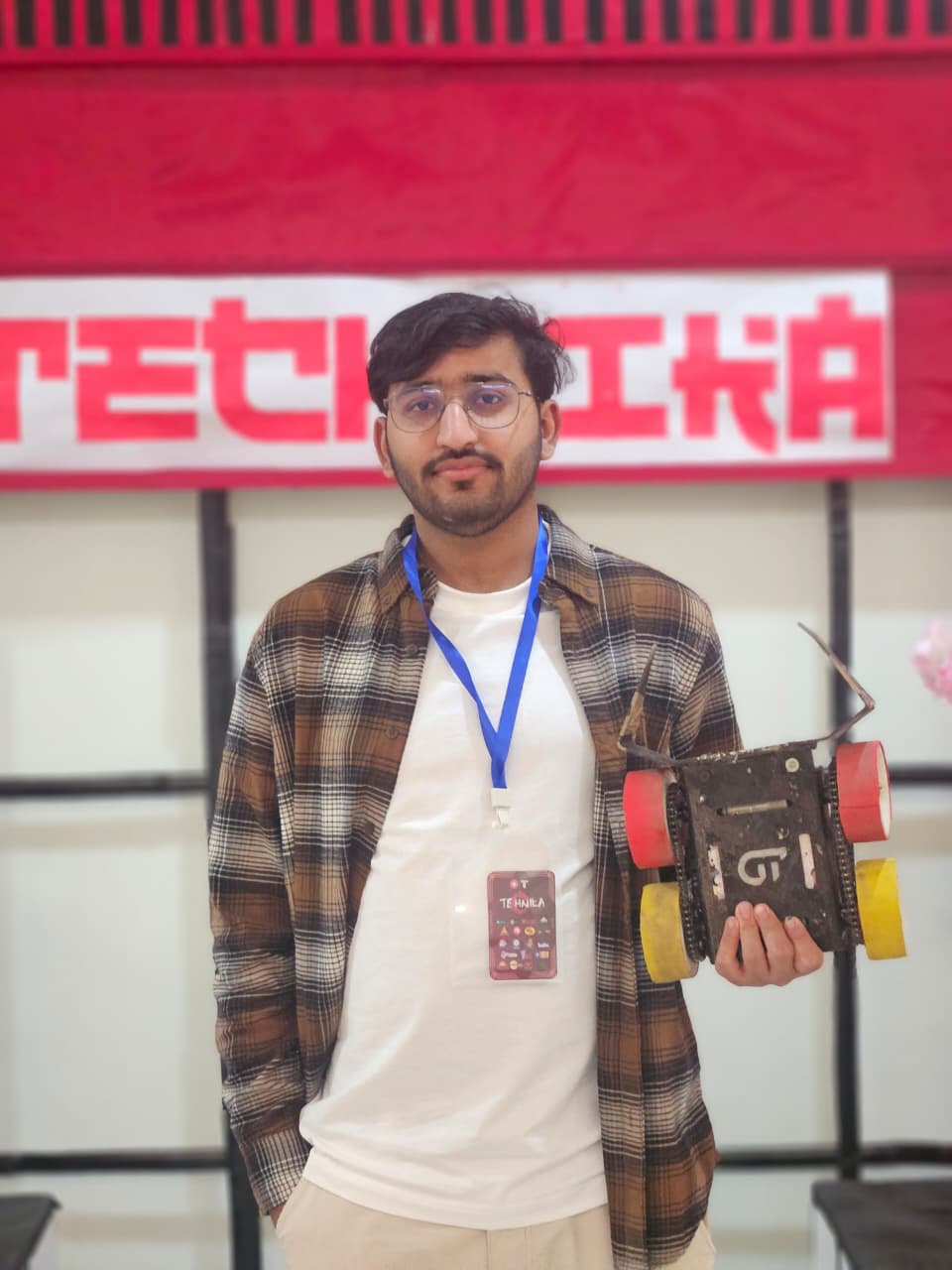
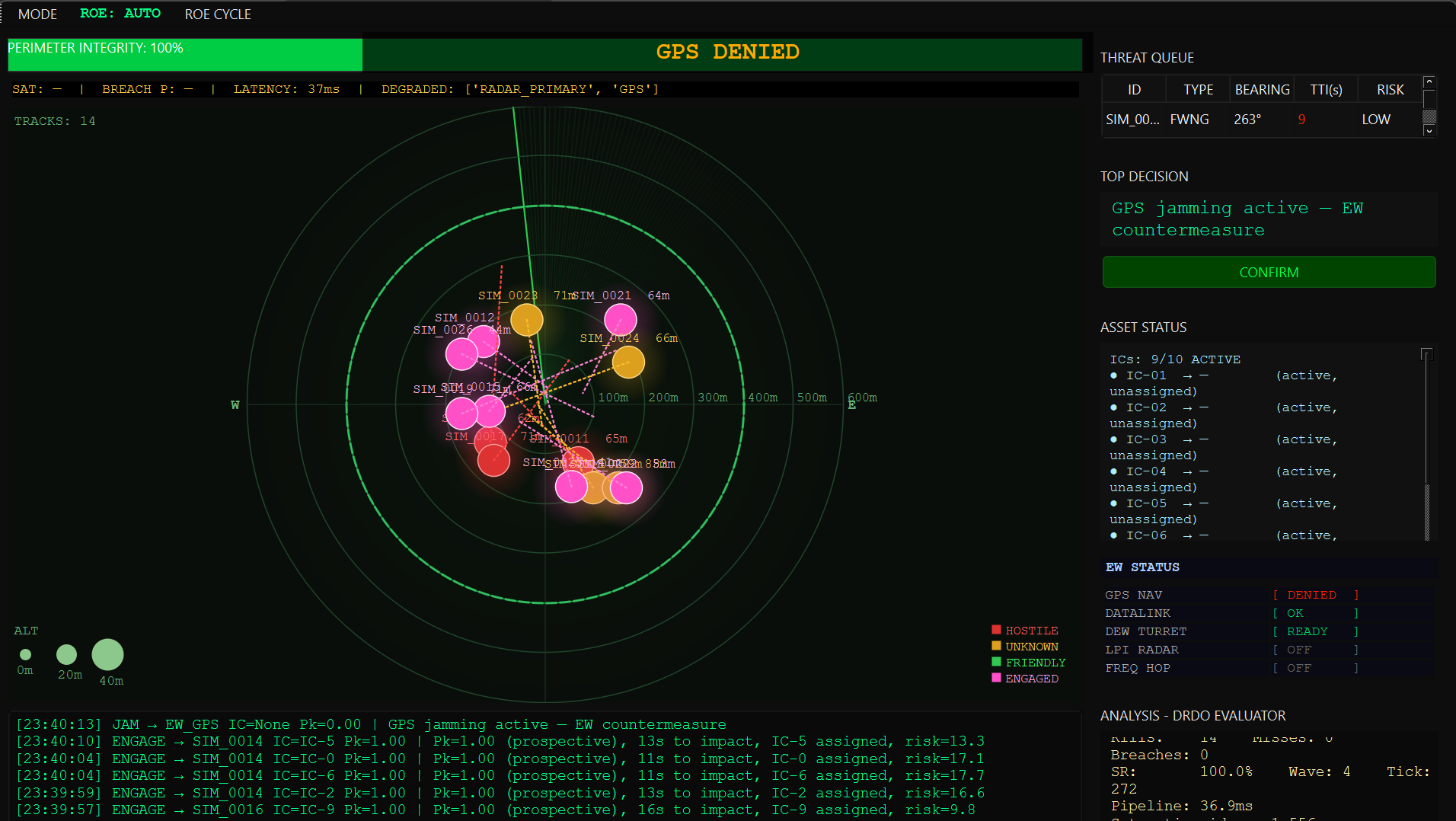
19 years old. From Patna, Bihar. The story starts with a ₹280 Arduino project and ends — so far — with defense AI, a world championship, and a paper under NeurIPS review. I didn't wait for the right conditions. I built through them. Emergency intelligence in 60+ countries. Robots that feed nations. Systems built for real problems — and still going.
Every system I've built started with a physical object I had to make move, fly, or think. Theory doesn't betray you the way hardware does — and that's exactly why I start there. Drag to inspect what we fly.
60+ countries. Each marker is a live SOS broadcast zone. Click any country to see simulated event data — turns a statistic into a lived reality.
Click a domain. These aren't resume keywords — each one has a project behind it.
Fly a physics-based drone. Real PID control loops — roll, pitch, and yaw update live as you fly. The same math that runs the real drone.
Hypothetical LEO path for Project Kalpana. Physics-accurate Keplerian propagation at 500km altitude, 51.6° inclination. Drag to rotate, scroll to zoom.
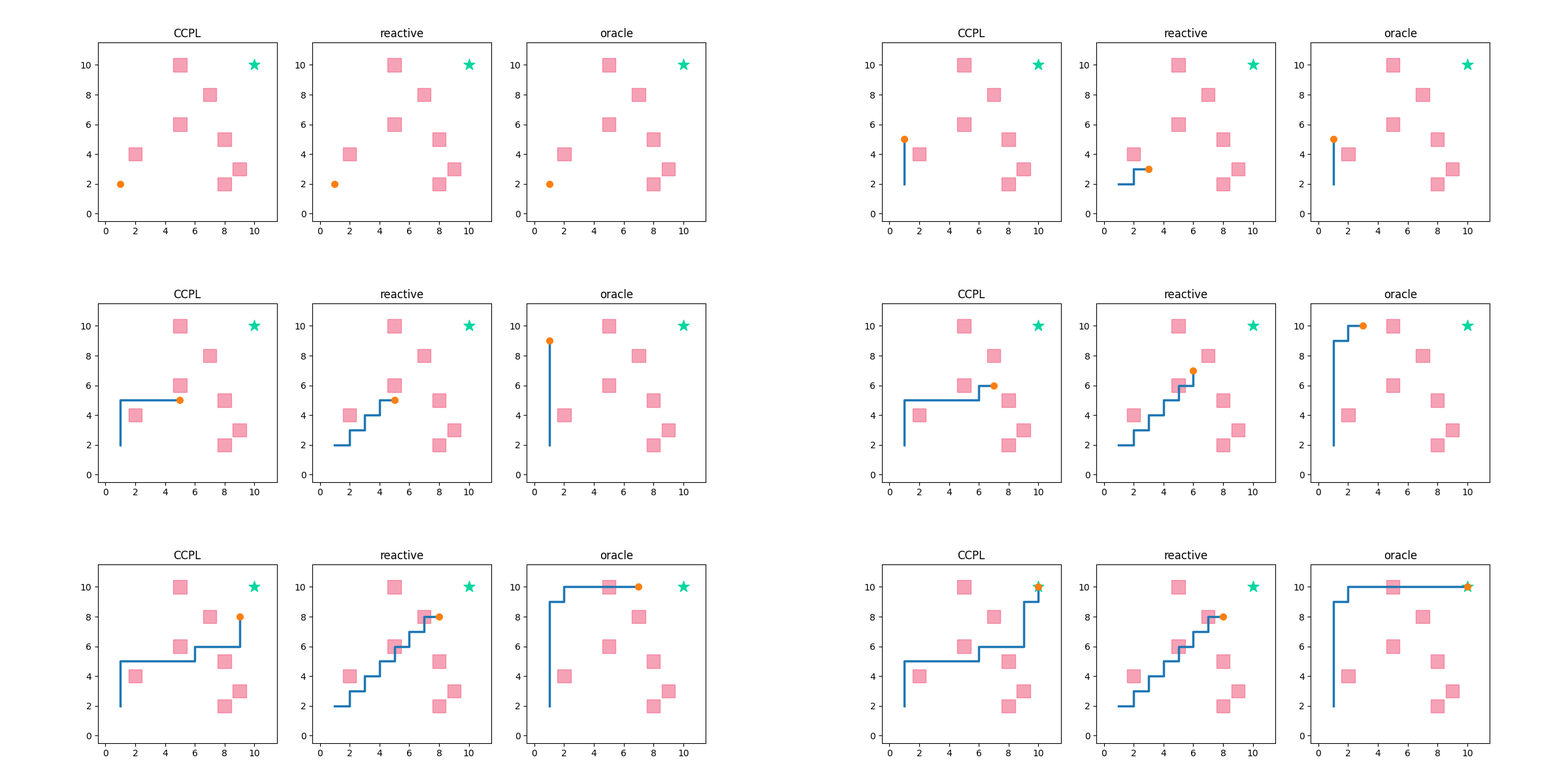
Building systems that could hurt people if they go wrong makes you take alignment seriously — not as an abstract academic exercise, but as an engineering constraint. These papers come from that pressure.
The portfolio shows the results. This is the part most portfolios skip — the actual process, the failures, and the things I'd do differently. Build logs are more honest than highlight reels.
Real-time COCO-SSD object detection in your browser. No server. No upload. The same tech stack behind AEGIS_X.
Click to throw. The AI Dustbin predicts the arc and intercepts. Adjust physics to see how the system adapts — same logic as the real 91% catch-rate build.
If you're working on defense AI, robotics, alignment, or something that doesn't have a name yet — I'm interested. I'm looking for collaborators, researchers, and institutions willing to build at the edge. Not the comfortable edge. The actual one.